

COLOMBO · SRI LANKA
House of 1870
❧
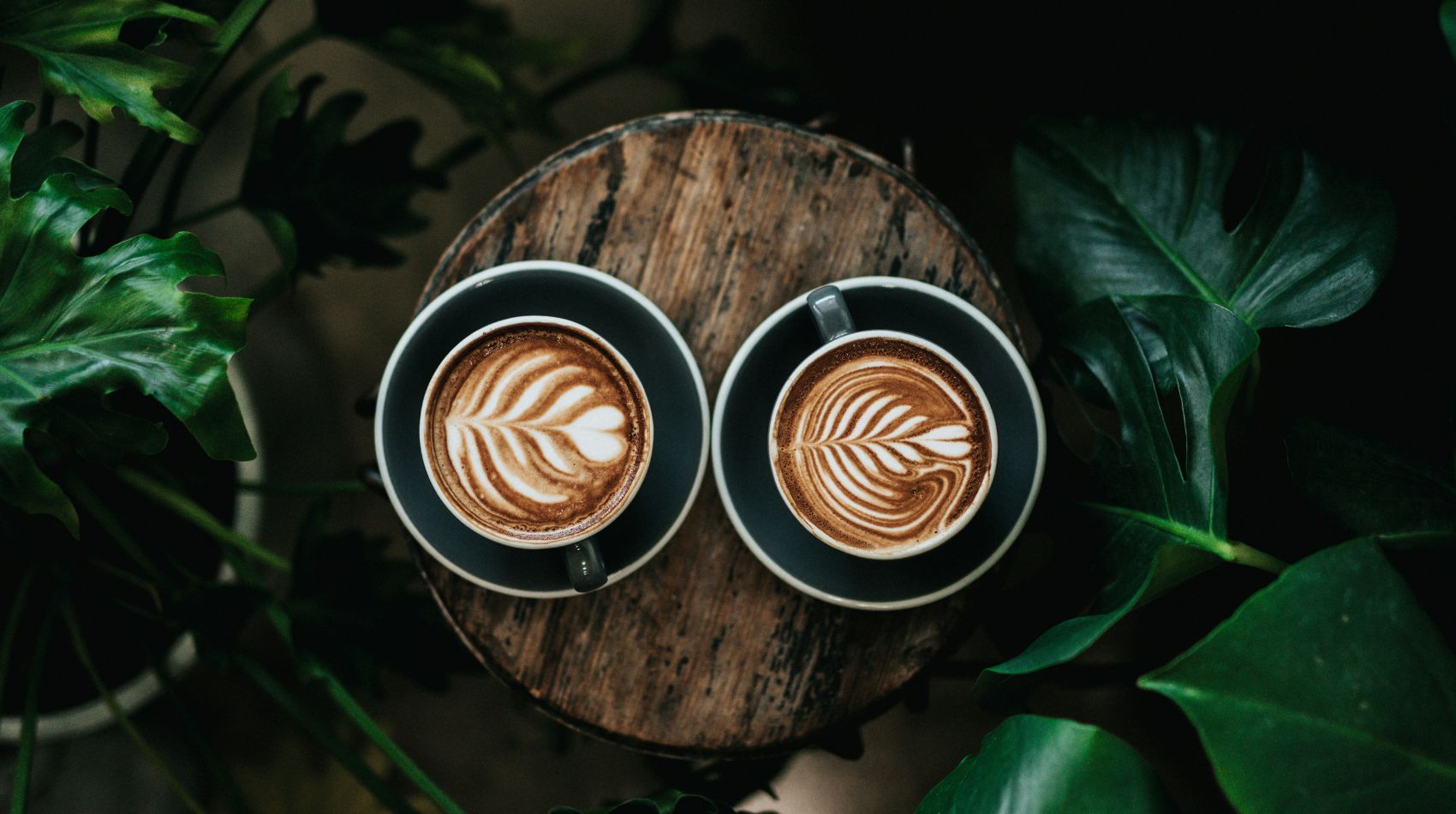
Coffee Heritage in Every Cup
Coffee ShopFree Coworking SpaceHigh-Speed InternetPrivate Cinema Lounge
↓ Scroll
275K
ACRES UNDER COFFEE IN 1870
#1
WORLD’S LARGEST PRODUCER
1/3
OF ALL EUROPE’S COFFEE FROM CEYLON
Our Story
The Island the
World Woke Up To
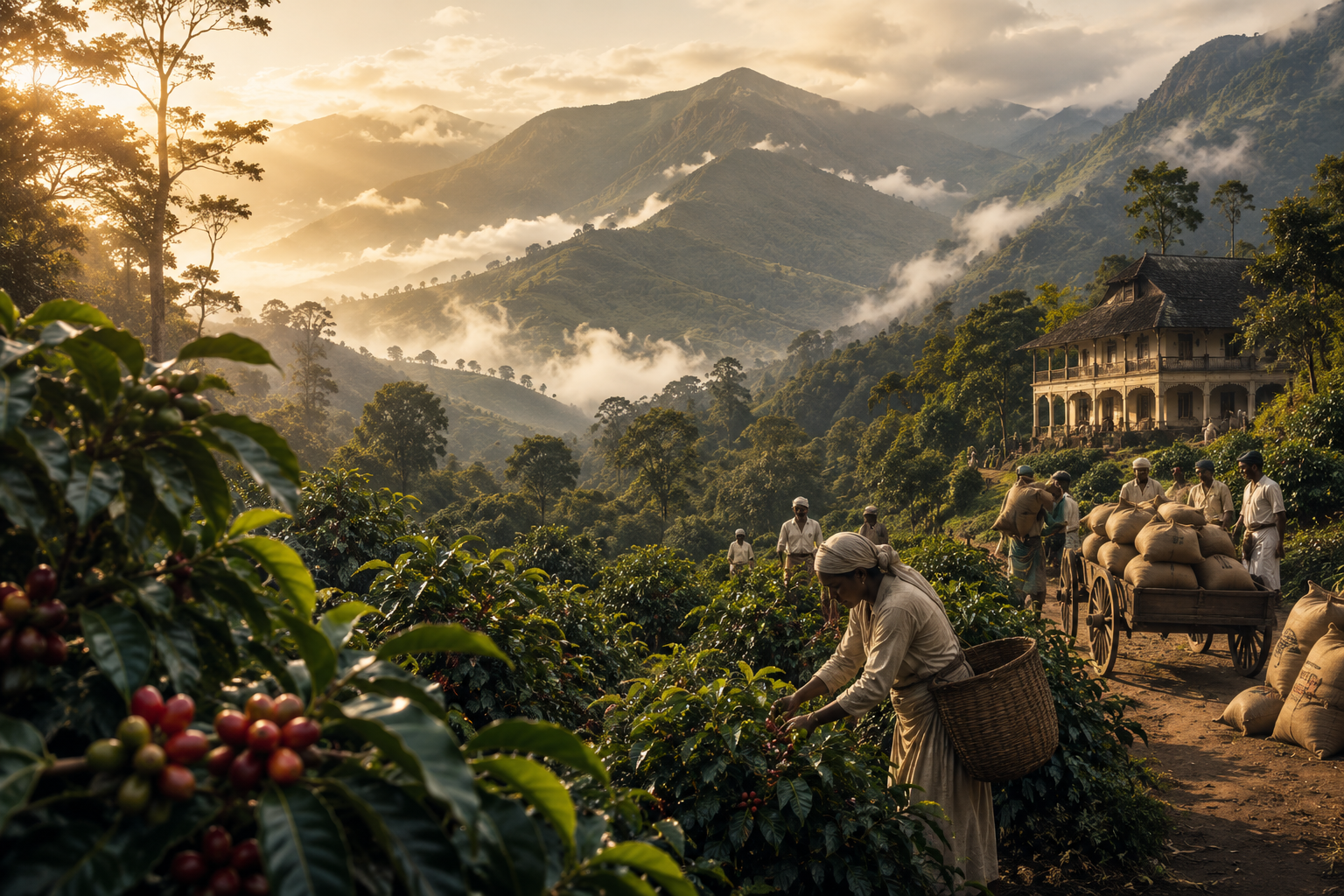
Before the world knew “Ceylon” for its tea, it lived for its coffee. Imagine it’s 1870. The mist-clung peaks of Kandy, Nuwara Eliya, and Badulla aren’t striped with tea bushes — they are an emerald ocean of coffee trees.
This wasn’t just a local crop; it was a global phenomenon. Shipping a staggering 100 million pounds of beans annually, Ceylon was out-pacing every nation on Earth except Brazil. If you were sitting in a Parisian café or a London coffee house in the late 19th century, there was a one-in-three chance the dark, rich brew in your cup began its journey in our highlands.
Most people have forgotten this chapter, burying it under a century of tea leaves. But we haven’t. This isn’t just a dusty footnote in a history book — it’s a legacy of excellence that’s pulsing back to life.
The Fall: Devastating Emily
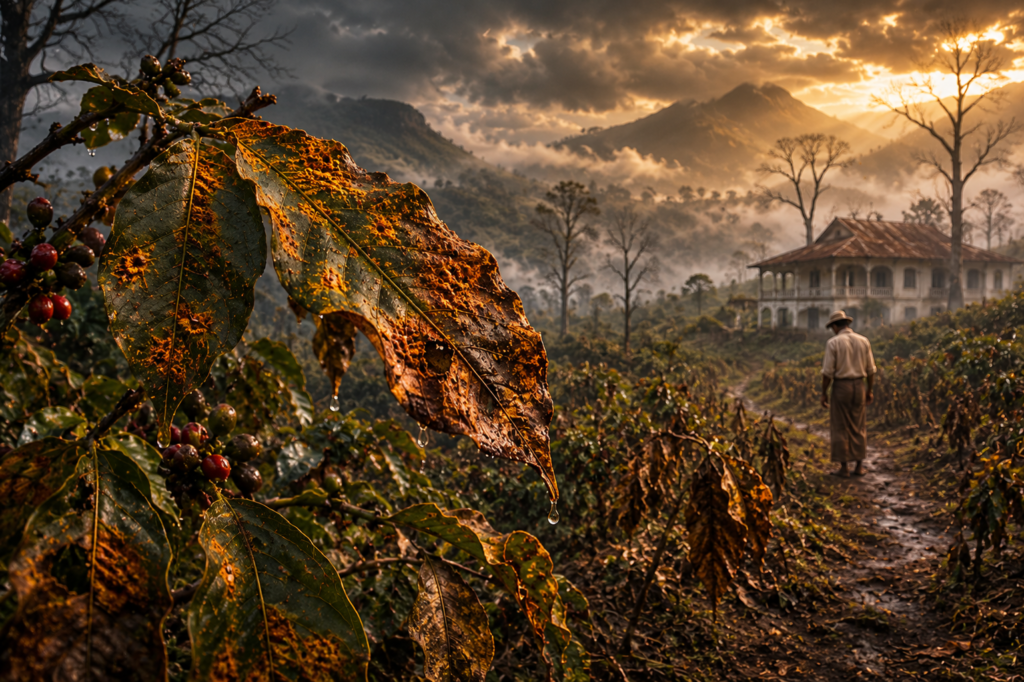
Then, in a heartbeat, the golden age vanished. It didn’t take an army or a market crash to bring a titan to its knees — it took a tiny, microscopic fungus. They gave it a hauntingly poetic name: “Devastating Emily.”
It began as a single, rust-colored blemish on a leaf in the Kandy hills in 1869. Within two decades, Hemileia vastatrix — coffee leaf rust — had marched across the highlands like an unstoppable wildfire. For 150 years, the story of Sri Lankan coffee remained a ghost — haunting the hills but never spoken of.
Until now.
A Century and a Half
in Four Acts
1840s
The Rush Begins
Coffee takes hold. Investors arrive, forests are cleared, railways are built. Everyone calls it the “Coffee Rush.”
1870
The Peak
Ceylon becomes the world’s largest coffee producer. 275,000 acres in cultivation. A third of Europe’s supply comes from this island.
1869–1880s
The Fall
“Devastating Emily” strikes. The coffee leaf rust spreads estate by estate until almost nothing is left. Tea takes coffee’s place.
Today
The Return
Sri Lanka’s highland coffee is being rediscovered. Arabica from Nuwara Eliya and Kandy is scoring above 86 points in international cuppings — chocolatey, nutty, quietly extraordinary.
The Founders
Two Doctors,
One Dream
We didn’t choose our name for the sake of nostalgia. We chose it as a statement of fact. House of 1870 is named after the year Sri Lanka stood at the summit of the global coffee trade — a reminder that Sri Lankan coffee never needed to prove its worth to the world. It already had. The world simply forgot.
We are here to make them remember.
“During our final year of medical school, we practically lived in coffee houses — heads buried in books, cups never empty. Between the medicine notes and the late nights, we shared a quiet dream: one day, we’d build a place like this ourselves. A place where great coffee met great company. House of 1870 is that dream, finally poured into a cup. We hope you feel it in every sip.”
Co-founders, House of 1870
“1870 isn’t just our history. It’s our standard.”